


Gas-phase Hydrogen Measurements using a Needle Sensor
Introduction
Hydrogen is widely regarded as a promising alternative to fossil fuels due to its high gravimetric energy density and clean combustion, producing only water as a by-product. However, the sustainability of hydrogen as an energy carrier is strongly dependent on how it is produced. Conventional routes, such as steam methane reforming, remain carbon-intensive, which motivates the development of low emission strategies.
Photocatalytic hydrogen production through water splitting offers an attractive approach by directly converting solar energy into hydrogen. However, the water oxidation half-reaction is associated with high thermodynamic barriers, which limit the overall efficiency. One strategy to overcome these limitations is the use of a sacrificial electron donor instead of water.
In a 2025 study, Beckedorf et al. used an agricultural by-product in the form of lignocellulosic biomass as a sacrificial electron donor, which simultaneously facilitates hydrogen evolution and consumes biomass. Carbon nitride serves as the photocatalyst, and the authors aimed to enhance its photocatalytic activity by loading it with the Earth-abundant metal cobalt.
Laboratory Setup and Methods
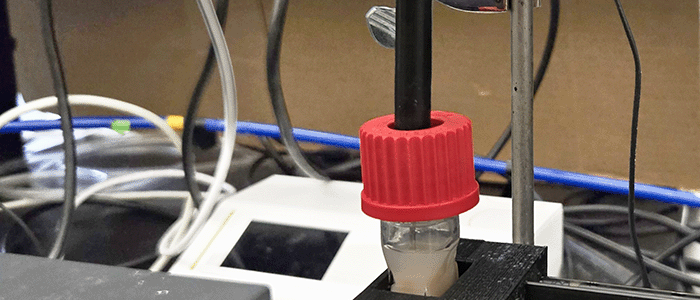
Photocatalytic hydrogen evolution experiments were carried out in a 16 mL sealed quartz cuvette under irradiation with a 405 nm LED. The reaction suspension contained the carbon nitride–based photocatalyst and a selected biomass-derived sacrificial electron donor in an alkaline aqueous solution of 10 mL. Prior to illumination, the system was purged with argon to remove hydrogen.
Hydrogen production was quantified by measuring the hydrogen partial pressure in the cuvette headspace. For this purpose, a Clark-type hydrogen sensor in a needle for piercing was used. After irradiation, the cuvette was thoroughly shaken to equilibrate hydrogen between the liquid phase and headspace, and the sensor was inserted into the headspace for the measurement. The total amount of hydrogen produced in the cuvette was calculated from the hydrogen partial pressure using the ideal gas law and Henry’s law.

Calculations
By thoroughly shaking the cuvette prior to the headspace measurement, equilibrium between the liquid and gas phases was established, resulting in identical hydrogen partial pressures in both phases. The amount of hydrogen in the 6 mL headspace was calculated using the ideal gas law. An example calculation using an arbitrary hydrogen partial pressure of 1500 Pa is shown here.
The hydrogen present in the gas and liquid phases can be summed to determine the total amount of hydrogen in the cuvette. With 3.69 μmol of hydrogen in the 6 mL gas phase and 0.12 μmol in the 10 mL liquid phase, the liquid-phase hydrogen accounts for approximately 3.25% of the total hydrogen, highlighting the low solubility of hydrogen in water.

Hydrogen production from the carbon nitride-based photocatalyst in the presence of a biomass-derived sacrificial electron donor in alkaline aqueous solution was quantified via gas-phase measurements. During irradiation, equilibration between the liquid and gas phases was not performed continuously, resulting in a modest increase in the measured hydrogen partial pressure in the headspace (Fig. 2).
Gas-phase measurements obtained after equilibration showed higher hydrogen partial pressures, as hydrogen dissolved in the liquid phase redistributed into the headspace. These end-point measurements were used to calculate the total amount of hydrogen produced for the different photocatalyst compositions.
Carbon nitride photocatalysts loaded with varying amounts of cobalt as a cocatalyst were evaluated for hydrogen production. Photocatalysts containing 0.3% and 0.6% (wt.%) cobalt showed the highest hydrogen yields, reaching nearly three times the hydrogen production of the cobalt-free control (Fig. 3). At higher cobalt loadings, hydrogen production decreased, which is attributed to partial blocking of the limited active sites on the carbon nitride surface and reduced light absorption.
The sensor-based approach enabled sensitive, real-time detection of hydrogen evolution in the sealed cuvette. In this study, gas-phase measurements were used to calculate the total hydrogen produced; however, the same sensor approach can be applied to measure hydrogen directly in both the liquid and gas phases simultaneously, enabling validation of phase equilibration and further improving measurement accuracy.

Economic amplifier portfolio for single analytes - O2, pH/mV, H2, N2O or H2S
Measure dissolved and gaseous hydrogen with a high-precision
Monitor temperature in your sample

Calibrate your sensors and log time-series data.
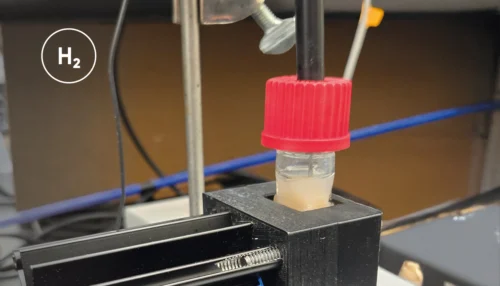
Beckedorf et al. used lignocellulosic biomass and cobalt-loaded carbon nitride to boost photocatalytic hydrogen production
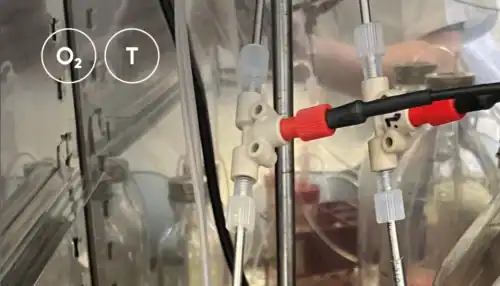
Bang et al. developed a dual flow chamber that mimics the shear stress and anaerobic conditions of the colon
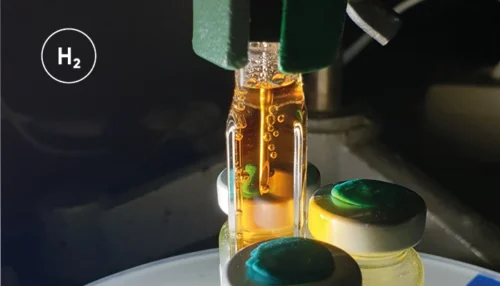
Quantifying the Hydrogen Evolution Reaction using H2 Sensors
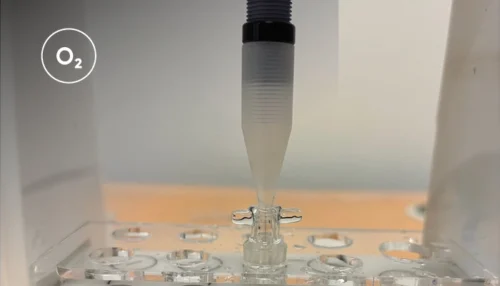
Real-time measurements of oxygen consumption rates in response to 2-deoxy-D-glucose treatment
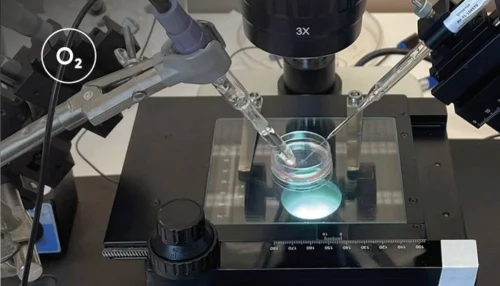
pH Microelectrode reveals distinct environment inside 3D organoid
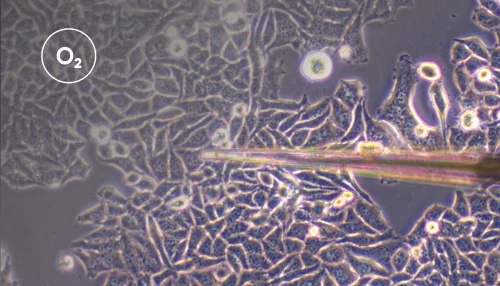
Tissue oxygen partial pressure for screening and controlling for variation in ex vivo acute brain slice viability
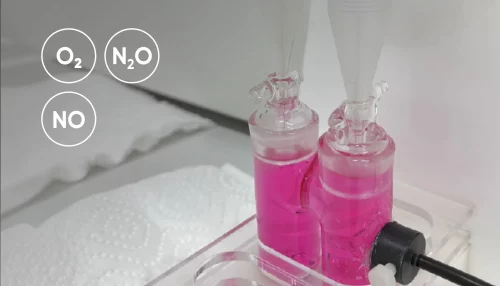
How nitrifying microorganisms are able to produce nitrous oxide through denitrification
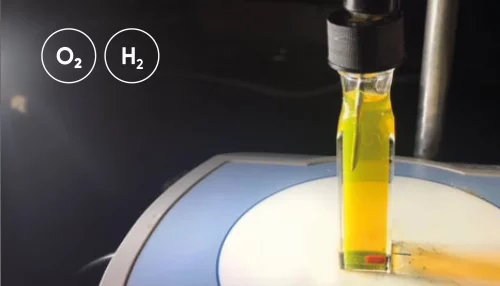
Hydrogen and oxygen microsensors for direct and real-time detection of dissolved gas in photocatalytic/electrochemical studies
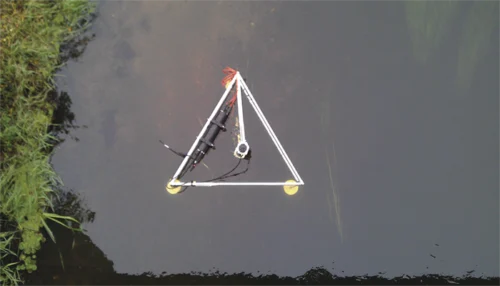
The Eddy Covariance system and how to get high quality data from long term deployments with multiple sensors.
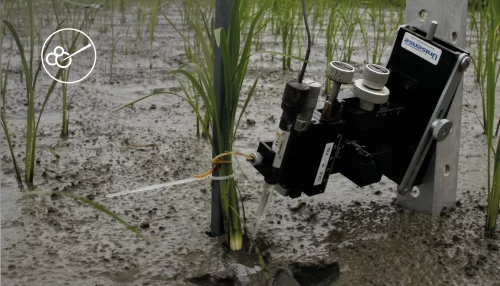
Learn in the laboratory - explore and confirm in the field!
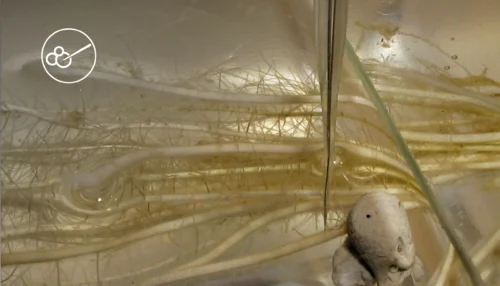
Leaf gas films are hypothesized to improve internal aeration of the plant during the day
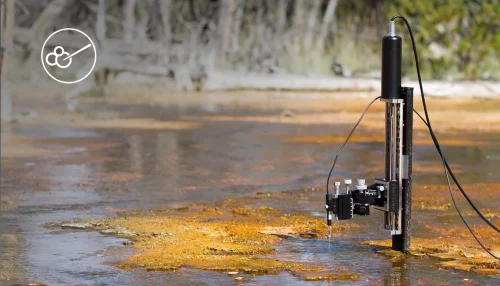
How to quantify the consumption rate of oxygen as well as the oxygen exchange rate across the water - sediment interface
Mitigation of N2O Emissions from Wastewater Biofilms
The use of oxygen microelectrodes to study nitritation biofilms with different geometries
O2 and N2O microprofiles in sputum samples from cystic fibrosis patients with chronic Pseudomonas aeruginosa lung infection
